
Stocks Market
Morocco's Trade Landscape Shifts: Europe Holds 59.8% Share While Asian Markets Surge
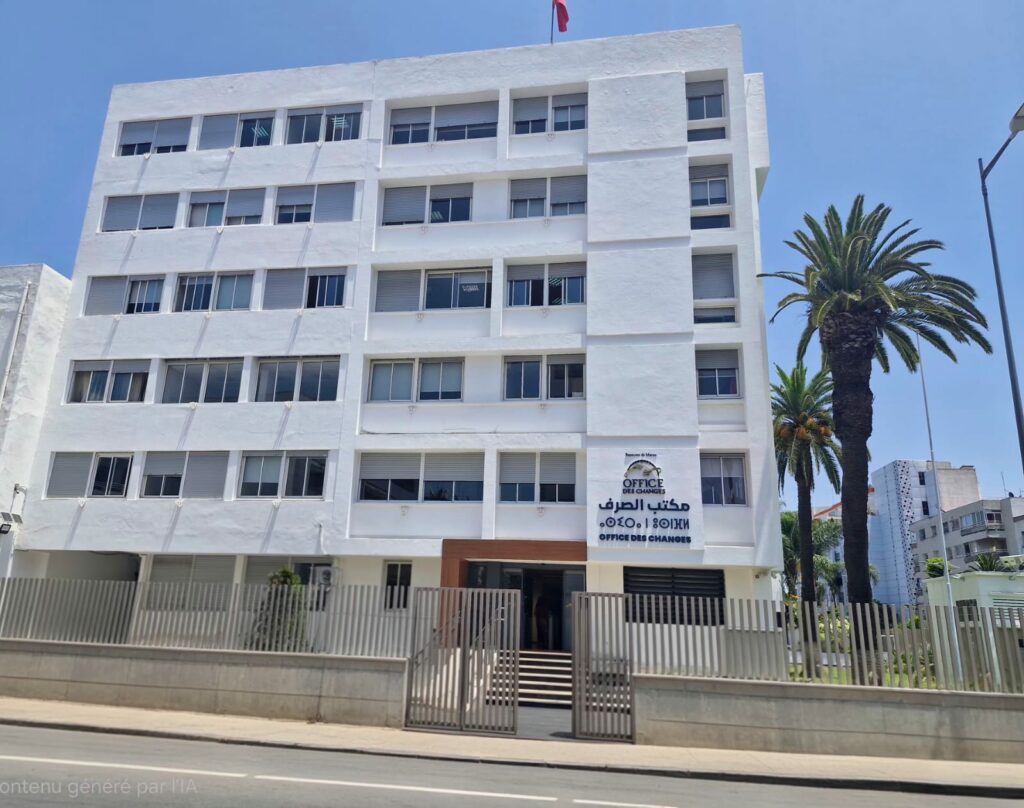
Morocco's foreign trade landscape is experiencing a gradual but significant shift. While Europe remains the Kingdom's dominant trading partner at 59.8% of total exchanges in 2025, this represents a decline from 62% the previous year. The Office des Changes annual report reveals Asia's accelerating role, now capturing 21.9% of trade flows—up from 20.1%—driven by exceptional growth in commerce with China, India, and Bangladesh. This evolving pattern signals Morocco's increasingly diversified global trade footprint.
Listen to this article
Unlock audio versions of premium articles and more with a Pro subscription.
Morocco's trade relationships are undergoing a notable transformation, according to fresh data from the Office des Changes. The Kingdom's annual trade report for 2025 reveals a continuing, albeit gradual, shift in commercial partnerships that could reshape economic ties in the coming years.
European Dominance Shows Signs of Erosion
Europe maintained its position as Morocco's primary trading partner in 2025, accounting for 59.8% of the nation's total trade volume. However, this figure marks a decline from the 62% recorded in 2024, suggesting a slowly evolving trade landscape. European nations absorb nearly 70% of Moroccan exports while supplying 54.2% of imports to the Kingdom.
The total value of trade flows with European partners reached 773.1 billion dirhams, representing a modest 2.4% increase year-over-year. Notably, 85.8% of these transactions involve European Union member states. Spain continues to lead as Morocco's top trading partner with a 27.5% share, followed by France at 21.1%, Germany at 8.9%, Turkey at 7.3%, and Italy at 7.1%.
Asian Markets Demonstrate Robust Growth
The standout story of 2025 is Asia's remarkable performance. Trade between Morocco and Asian nations surged 15.6% during the year, building on momentum from 2024. Asia's share of Morocco's global commerce climbed from 20.1% to 21.9%, directly challenging Europe's traditional dominance.
China remains the driving force behind this Asian expansion, with bilateral trade growing for an impressive fourteenth consecutive year—posting a 25.1% increase in 2025. India and Bangladesh are following similar trajectories, recording spectacular growth rates of 36% and 34.5% respectively. These figures underscore the deepening economic integration between Morocco and emerging Asian economies.
Americas Show Mixed Performance
Trade with the American continent expanded by 8% overall, primarily driven by increased exchanges with the United States, which grew 7.9%. However, this growth was partially offset by contractions in trade with Canada (down 6.2%) and Brazil (declining 1.9%), indicating uneven development across the Americas region.
African and Oceanic Trade Patterns
Within Africa, Morocco's commercial exchanges increased 6.1% in 2025, maintaining relatively stable levels compared to the previous year. South Africa led the growth with a striking 73.2% surge, while Tunisia and Egypt recorded increases of 32.5% and 9.4% respectively. Egypt retained its position as Morocco's leading African trading partner for the seventh consecutive year.
Trade with Oceania, which represents a marginal 0.4% of total exchanges, contracted 16% during the year. This decline stems primarily from reduced commerce with Australia, which fell by 1.6 billion dirhams, though partially compensated by a 0.7 billion dirham increase in New Zealand trade.
Strategic Implications
These trade patterns reveal Morocco's gradual economic pivot eastward, diversifying away from traditional European partnerships while maintaining strong transatlantic ties. The sustained growth in Asian trade—particularly with manufacturing powerhouses like China, India, and Bangladesh—reflects both Morocco's expanding export capabilities and its increasing demand for Asian goods and investment.
As global trade dynamics continue evolving, Morocco's balanced approach to maintaining European relationships while aggressively pursuing Asian opportunities positions the Kingdom as an increasingly important player in transcontinental commerce.