
Stocks Market
U.S. Defends Russia's Seat at G20 Finance Summit as Western Allies Express Discontent
Washington stood firm on its decision to include Russia at the G20 Finance meetings in Asheville, North Carolina, despite vocal opposition from European partners and Canada. Treasury Secretary Scott Bessent defended the controversial move as necessary for maintaining dialogue, though the gathering revealed deepening rifts not only over Russia's participation but also on sanctions against Iran and trade imbalances with China. The two-day summit concluded with a final communiqué that highlighted divisions within the group, particularly on freedom of navigation in the Strait of Hormuz—a passage blockaded by Iran amid its ongoing conflict with the United States.
Listen to this article
Unlock audio versions of premium articles and more with a Pro subscription.
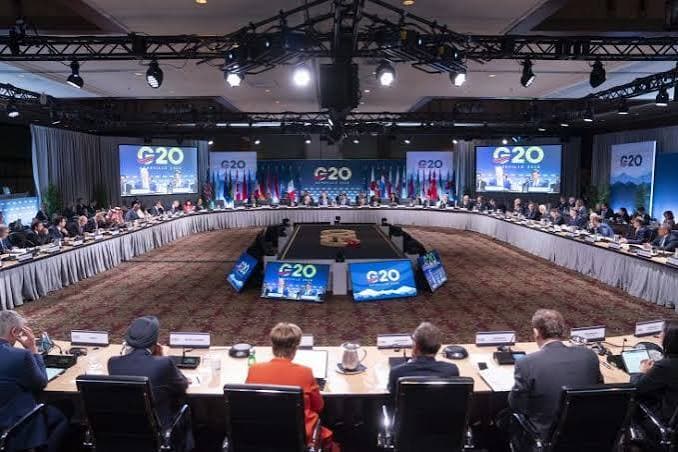
The United States has firmly defended its decision to maintain Russia's participation at the G20 Finance meetings, despite significant discomfort expressed by several Western allies. Finance ministers and central bank governors concluded two days of tense discussions in Asheville, North Carolina, on Tuesday, with geopolitical tensions and disagreements between Washington, its European partners, and China dominating the agenda.
Bessent Defends Controversial Russian Participation
U.S. Treasury Secretary Scott Bessent justified the invitation extended to Russian Finance Minister Anton Siluanov, arguing that the Russian official's presence did not disrupt the substantive discussions. However, Bessent acknowledged that some European delegates left with a "bitter taste" from the decision. He maintained that keeping dialogue channels open with all parties remains essential to contributing toward ending the Russia-Ukraine conflict.
The Russian presence drew sharp criticism from multiple quarters. Canadian Finance Minister François-Philippe Champagne admitted that his Russian counterpart's attendance created palpable discomfort. European Commissioner for Economy Valdis Dombrovskis stated bluntly that the time has not come to normalize Russia or its presence at such gatherings.
Photo Protocols Reveal Deep Divisions
The tensions manifested in unusual protocol arrangements. The European Union successfully pushed to exclude the Russian minister from the traditional G20 family photo, which was taken without media presence. At a parallel session focused on innovation, organizers took the extraordinary step of staging two separate photographs: one including the Russian representative without Europeans and Canada, and another with Europeans and Canada but without Russia.
Final Communiqué Highlights Strait of Hormuz Concerns
Despite political frictions, G20 Finance members adopted a six-page final communiqué distributed by U.S. authorities. The document emphasizes the importance of freedom, security, and predictability of navigation in the Strait of Hormuz and worldwide. It also identifies the resolution of ongoing wars and conflicts as essential to sustainable growth.
The paragraph addressing the Strait of Hormuz—blocked by Iran since the start of its war with the United States—received approval from all G20 members except China. Beijing also opposed other sections of the communiqué, particularly passages concerning global imbalances, a phrase regularly associated with China's trade surplus.
U.S. Pushes Economic Agenda and Iran Sanctions
The summit provided Treasury Secretary Bessent with a platform to promote the administration's economic policies. He particularly highlighted deregulation as a driver of growth. Washington also sought to persuade partners to economically isolate Iran through the implementation of sanctions.
Exclusions and Media Restrictions Mar Summit
The meeting occurred in an unusually sensitive context. South Africa, despite being a permanent G20 member like Russia, was excluded due to political disputes with Washington. Several journalists from The New York Times, The Wall Street Journal, and Bloomberg were also denied accreditation to cover the event.
December Summit in Miami Looms
The United States will host the final G20 meeting of its presidency in December, this time at the heads-of-state level. The summit will take place at a golf complex owned by Donald Trump in Miami. Analyst James Lindsay anticipates a complicated gathering, given the persistent divergences between the United States and China, as well as between Washington and its allies.
Beyond protocol and diplomatic tensions, the Asheville meeting underscores the G20's growing difficulty in reaching common positions on major economic and geopolitical issues. Russia's presence, disagreements with China, and the question of sanctions against Iran are expected to continue weighing on upcoming international meetings.