
Stocks Market
Middle East Conflict Triggers Unprecedented Oil Supply Shock, IEA Warns
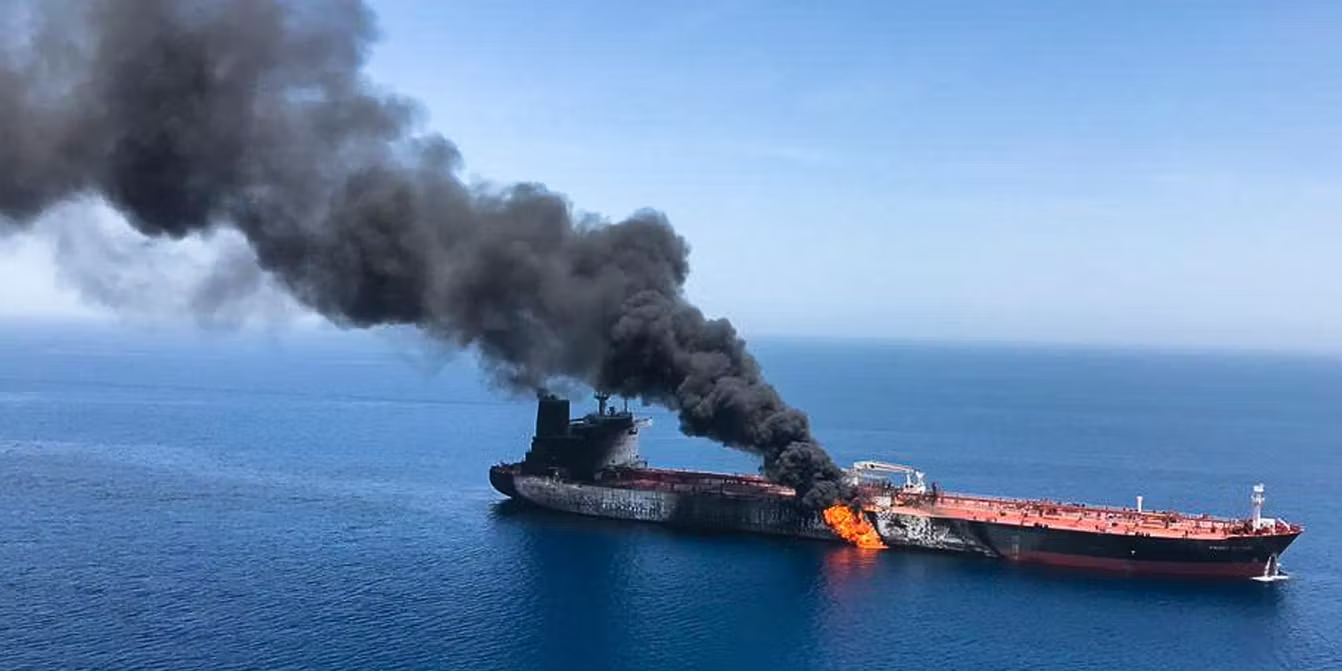
The war that erupted on February 28 with U.S.‑Israeli strikes on Iran has effectively shut the Strait of Hormuz, the world’s key oil chokepoint. The International Energy Agency (IEA) calls the resulting supply shock the most serious disruption in history, noting that Gulf producers have trimmed at least 10 million barrels per day. In response, the IEA‑member nations released a record 400 million barrels from strategic reserves, yet Brent and WTI prices surged more than 6 % in early trading. Analysts warn that the geopolitical alarm will linger, keeping markets on edge and potentially extending the volatility beyond the immediate price spike.
Listen to this article
Unlock audio versions of premium articles and more with a Pro subscription.
Middle East War Sparks Historic Oil Supply Shock
The conflict that began on 28 February with coordinated U.S.‑Israeli strikes against Iran has effectively blocked the Strait of Hormuz, the world’s most crucial oil corridor. The International Energy Agency (IEA) warned Thursday that this represents the "most significant disruption" of oil supply in recorded history.
According to the IEA, Gulf states have already reduced output by at least 10 million barrels per day due to the closure of the strait, which is de‑facto under Iranian control.
In a desperate attempt to calm volatile markets, the 32 IEA‑member countries—including the United States—released a record 400 million barrels from their strategic petroleum reserves on Wednesday.
Despite the release, prices surged early Thursday: European Brent rose 6.6 % to $98.04 a barrel, while the U.S. benchmark West Texas Intermediate (WTI) climbed 6.3 % to $92.72. Asian markets reacted negatively; Tokyo’s index fell 1 %.
Stephen Innes of SPI Asset Management summed up the mood: “The geopolitical alarm continues to ring at the Hormuz Strait. In broker‑speak, the IEA’s decision is like using a garden hose to douse a refinery fire.”
With oil prices spiking, the broader market sentiment remains risk‑averse, and investors are closely watching developments in the region.