
Stocks Market
Moulay Hafid Elalamy's 10 Rules for Building Enduring Businesses: Think Big, Start Small
At the CGEM forum 'Entrepreneurs in Motion' in Casablanca, veteran entrepreneur Moulay Hafid Elalamy shared hard-won lessons from building a business that reached a €3.3 billion Amsterdam listing and merger with Teleperformance. His 10 principles—spanning regulatory rigor, customer proximity, measured scaling, strategic focus, ethical wealth creation, timely exits, partner alignment, talent density, and succession planning—offer a practical blueprint for sustainable entrepreneurship in Morocco and beyond.
Listen to this article
Unlock audio versions of premium articles and more with a Pro subscription.
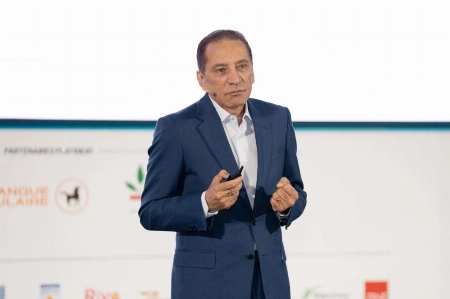
Entrepreneurship is neither a flash of inspiration nor a race to execute. At its core, it demands the discipline to make measured decisions, anticipate risk, and adapt strategy to market realities. That was the through-line of Moulay Hafid Elalamy's address on October 17 at the CGEM forum "Entrepreneurs in Motion: Turning Priorities into Action" in Casablanca.
No heroic narrative, no magic formula. Elalamy chose to speak from scars, not trophies — distilling ten rules learned "at his own expense" across three pillars: business foundations, strategy and purpose, and people and values. The candid, often humorous talk struck chords directly relevant to investors: governance, transparency, valuation, and exit discipline.
Foundations: The Non-Negotiables
- 1. Never cross the yellow line. Tax, customs, foreign exchange, social security, regulators — the smallest compliance gap catches up with anyone trying to scale. When his company listed in Amsterdam on September 24, 2021, lawyers and bankers scrutinized every public allegation against him to protect their own reputations. Lesson: build files that can answer questions you haven't even imagined yet.
- 2. Stay close to customers. A CEO who delegates all commercial contact loses the market's pulse — and with it, the ability to decide whether to deepen or exit an activity.
- 3. Think big, start small. Two ventures launched without sufficient study — a pan-African IT services champion and a Portugal-inspired healthcare pole — hit a wall. Conversely, a business started with 2 million dirhams of equity and modest bank debt survived a disastrous first hiring round (70 people let go, rebuilding with eight) to become an international group listed in Amsterdam at a €3.3 billion valuation, later merged with Teleperformance (490,000+ employees, ~10 billion dirhams free cash flow).
Strategy and Purpose: Where to Play and Why
- 4. Dare mature markets. African entrepreneurs often perform better abroad: demanding, fair markets that forge the best operators.
- 5. Integrate before diversifying. Diversify only when you own your core. Changing country, business, and partner simultaneously is a "guarantee of failure" — you don't replace all four legs of a chair at once.
- 6. Give it meaning. The state can demand ethics from captains of industry, no more. It wants "rich but ethical bosses": the more they earn, the more tax enables redistribution.
- 7. Know when to quit a business. His sharpest line: "Selling is not betrayal." He cites Kodak, which should have sold long before bankruptcy, and urges entrepreneurs who swear never to sell to "know when to leave the table."
People and Values: The Human Architecture
- 8. Choose your partners. Verify "DNA compatibility": shared ethics, risk appetite, and time horizon. No shareholders' pact fixes a bad match.
- 9. Surround yourself with people better than you. The "incompetence cushion": leaders who fear subordinates hire weaker profiles. His fix: evaluate every manager on the caliber of their team. Loyalty to an inherited advisor doesn't trump performance: "It's not infidelity, it's business."
- 10. Prepare for permanence. He targets mismanaged succession: handing the company to a child when that's the wrong call. Stripes are earned, not given — and assuming an owner must pass the reins to their children serves neither the heirs nor the enterprise.
Across all ten rules, one conviction emerges: durable growth depends less on accumulating ideas than on the quality of trade-offs. Study before accelerating, stay grounded in the market, face global competition, and renew teams and activities with the same rigor. For Elalamy, entrepreneurial boldness isn't about taking every risk — it's about equipping yourself to aim high without losing sight of the ground beneath your feet.