
Global Economy
Anthropic IPO Filing Sparks AI Rally on Wall Street, But Profitability Questions Linger
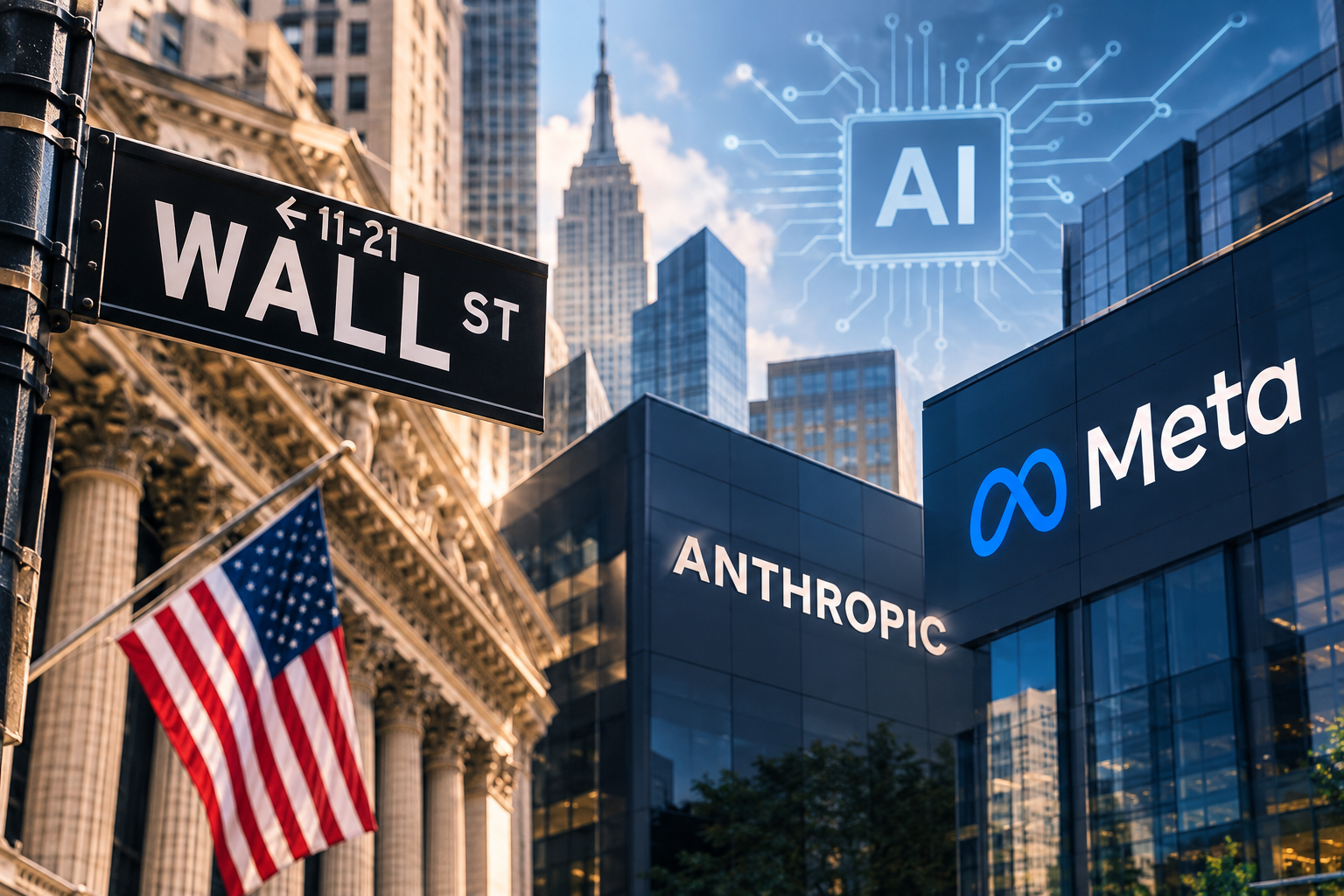
Wall Street staged its strongest comeback in over a month on Monday, led by a surge in AI and semiconductor stocks after Anthropic, the creator of Claude, filed for an initial public offering. While the Nasdaq jumped 1.25% and the Philadelphia Semiconductor Index rallied over 3%, investors remain cautious. Anthropic's filing reveals rapid revenue growth alongside heavy losses, underscoring the sector's unresolved economic equation. Meanwhile, Meta's plan to raise up to $95 billion for AI infrastructure and upcoming earnings from Alphabet, Microsoft, and Amazon will test whether massive capital expenditures can translate into sustainable profits, especially as rising borrowing costs complicate debt-funded AI expansion.
Listen to this article
Unlock audio versions of premium articles and more with a Pro subscription.
U.S. markets roared back to life on Monday, October 26, 2026, delivering Wall Street's best session in over a month. The Nasdaq Composite surged 1.25%, the S&P 500 advanced 0.92%, and the Dow Jones Industrial Average added 0.32%. The rally was supercharged in the chip sector, where the Philadelphia Semiconductor Index (SOX) jumped more than 3%.
Anthropic's IPO Filing Acts as Catalyst
The immediate spark was the long-awaited IPO registration filing by Anthropic, the artificial intelligence startup behind the Claude family of models. The prospectus confirms what insiders have long known: revenue is scaling at a breakneck pace. However, it also lays bare a stark reality—the company is burning through billions and posting significant net losses. This dichotomy encapsulates the central dilemma facing the entire AI ecosystem: how to finance hyper-growth while constructing a viable, profitable business model.
Meta's $95 Billion Bet Underscores Capital Intensity
If Anthropic's filing provided the spark, Meta Platforms (META) poured gasoline on the fire by announcing plans to raise up to $95 billion in fresh equity to fund its AI infrastructure build-out—specifically data centers and compute capacity. The move comes on the heels of revised, higher annual capex guidance that had previously rattled shareholders. The market is increasingly drawing a sharp line between AI's theoretical growth trajectory and the concrete ability of corporations to monetize the staggering sums being deployed.
Big Tech Earnings: The Litmus Test
All eyes now turn to this week's earnings barrage from the hyperscalers. Reports from Alphabet (GOOGL), Microsoft (MSFT), and Amazon (AMZN) will serve as the critical proving ground. Investors will dissect not just top-line growth, but the trajectory of operating margins, the payback period on AI infrastructure investments, and any signals on whether generative AI revenue is beginning to offset the torrential cash outflows.
Financing Conditions Add a Layer of Complexity
Beyond equity markets, the funding environment is under a microscope. Reuters notes that AI-linked equities came under pressure earlier in October amid fears that justifying debt-financed investments is becoming harder as borrowing costs climb. While the Federal Reserve was widely expected to hold rates steady at its Wednesday meeting, the interplay between monetary policy, inflation data, and the cost of capital for AI ventures remains a fluid risk factor.
Bottom Line
Monday's rebound underscores the market's enduring fascination with artificial intelligence. Yet the narrative is shifting: technological promise alone is no longer sufficient. The new price of admission is a credible path to profitability that validates the historic scale of capital being committed.