
Global Economy
ECB Set to Raise Interest Rates Amid Middle East Energy Crisis, Future Path Unclear
The European Central Bank is poised to increase its benchmark interest rate by 25 basis points to 2.5% this Thursday, marking its second hike since June. Soaring energy prices driven by escalating Middle East conflicts have pushed eurozone inflation to 3.3%, well above the ECB's 2% target. While the rate increase appears certain, ECB President Christine Lagarde is expected to provide little clarity on future monetary policy moves, leaving markets in suspense about whether additional tightening will follow.
Listen to this article
Unlock audio versions of premium articles and more with a Pro subscription.
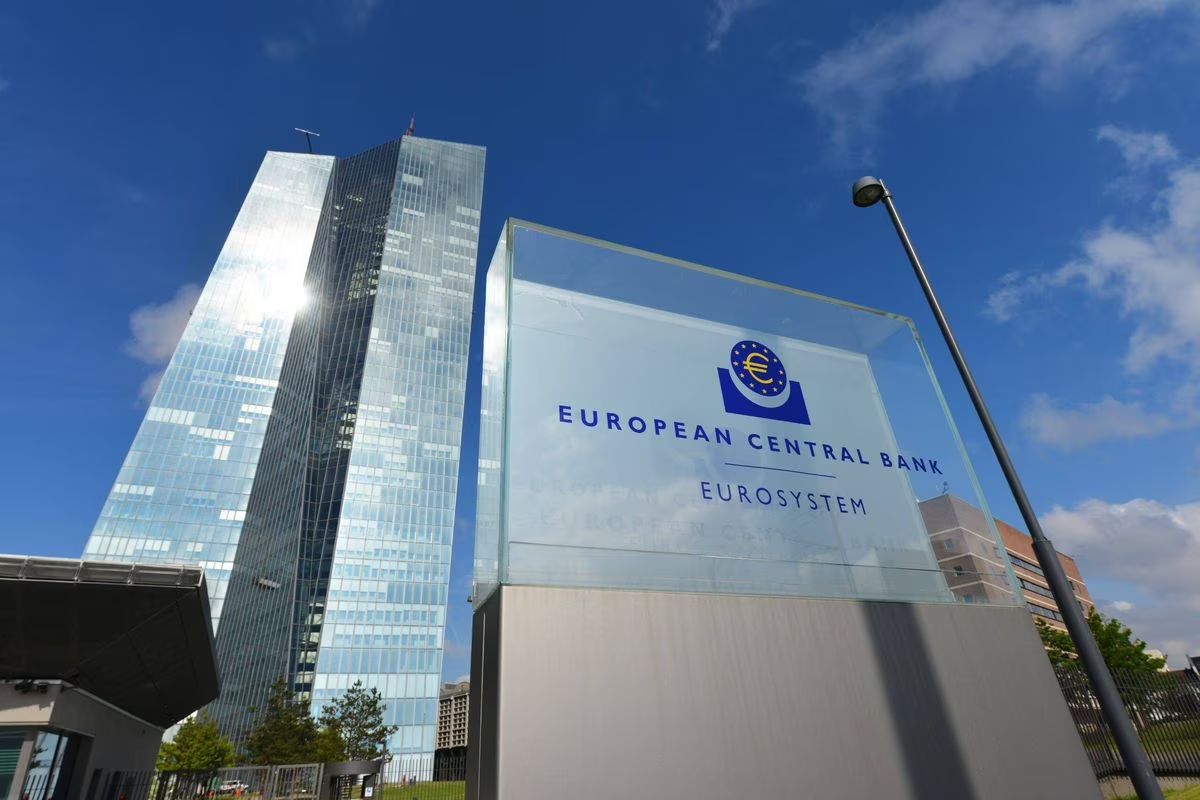
The European Central Bank faces a critical decision this Thursday as it grapples with surging energy costs triggered by escalating tensions in the Middle East. Market analysts widely anticipate the ECB will raise its key deposit rate by a quarter point to 2.5% during its monetary policy meeting in Berlin.
Energy Crisis Fuels Inflationary Pressures
Following an initial rate increase in June, the ECB continues to confront stubborn inflation driven by climbing oil prices. The geopolitical landscape has deteriorated significantly, with ongoing hostilities between the United States and Iran, as well as conflicts involving Iranian-backed Houthi rebels in Yemen and Saudi Arabia, a key U.S. ally in the region.
Brent crude oil crossed the $100 per barrel threshold on Wednesday for the first time since late July. Much of the concern centers on the Bab el-Mandeb strait, which has become increasingly vital for Saudi Arabian oil shipments amid the fighting between Saudi forces and Yemeni rebels. Additionally, hopes for a swift restoration of energy flows through the strategically critical Strait of Hormuz have dimmed considerably.
Inflation Exceeds Target by Wide Margin
For the eurozone, which relies heavily on energy imports, inflation reached 3.3% in August—the highest level in three years and significantly above the ECB's 2% mandate. The 27-member Governing Council, led by President Christine Lagarde, is expected to tighten credit conditions, accepting the knock-on effects on mortgage lending, corporate financing, and sovereign debt issuance.
This anticipated monetary tightening has sparked political debate across the eurozone. In France, far-left leader Jean-Luc Mélenchon preemptively criticized the move on social media platform X, arguing that France stands "on the brink of economic recession." He accused the ECB of "driving us into a wall" and reiterated his call to cancel French debt held by the Banque de France, a member of the Eurosystem.
President Lagarde may address such criticisms during her Thursday press conference, though the central bank consistently emphasizes its mandate to operate independently of national political considerations.
Future Rate Path Remains Uncertain
While Thursday's rate hike appears all but guaranteed, the more pressing question concerns the ECB's subsequent moves. Markets remain divided on whether additional increases will follow this one.
The release of updated macroeconomic projections will provide crucial insights. Economists suggest inflation forecasts may be revised slightly upward. While the ECB cannot directly combat energy price spikes caused by Middle Eastern conflicts, it closely monitors potential second-round effects on wages and broader prices that could entrench inflation and necessitate further policy tightening.
However, Eric Dor, Director of Economic Studies at IESEG School of Management, notes that "so far, the relative stability of core inflation excluding energy shows it's difficult to detect such effects." Dirk Schumacher, Chief Economist at KfW, anticipates that Lagarde will offer "few concrete indications about the future trajectory of rates."
Economic Resilience Provides Some Cushion
The eurozone economy continues to demonstrate surprising resilience, which helps alleviate concerns that higher borrowing costs will excessively constrain economic activity.
Beyond monetary policy discussions, Christine Lagarde is likely to field questions about her future at the institution. The January publication announcement of her autobiography has reignited speculation about an early departure. In a July interview with Les Echos, she did not rule out leaving before her term expires in October 2027 to potentially represent a "European voice" in the French presidential race.