
Global Economy
Morocco Transforms Airport Authority Into SA, Boosts Social Aid and Curbs Food Exports
Morocco's government approved a major restructuring of its airport authority on November 12, 2026, converting ONDA into a joint-stock company while implementing urgent measures to address rising food prices. The Council of Government also raised direct social assistance payments and temporarily suspended new export permits for key agricultural products to safeguard domestic supply.
Listen to this article
Unlock audio versions of premium articles and more with a Pro subscription.
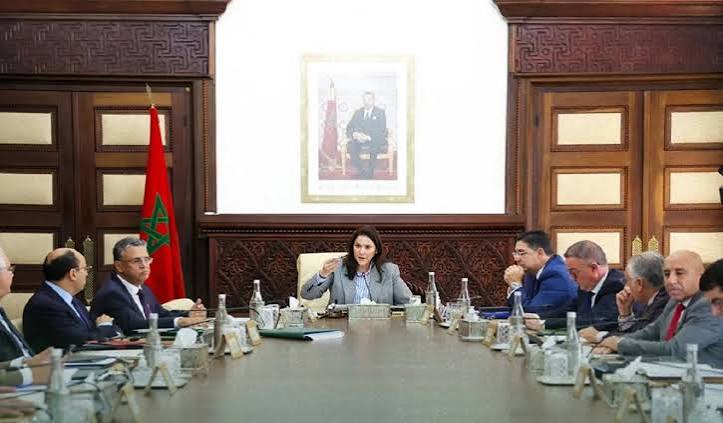
In a packed session on Thursday, November 12, 2026, Morocco's Council of Government, led by Prime Minister Fatima Zahra Mansouri, greenlit a series of significant reforms targeting public enterprise modernization and household purchasing power protection. The decisions span aviation infrastructure, food security, and social welfare programs.
Airport Authority Becomes "Aéroports du Maroc SA"
The Council approved draft law No. 06.25, which converts the National Airports Office (ONDA) into a joint-stock company. This transformation aligns with framework law No. 50-21 on reforming public establishments and enterprises, as well as law No. 82.20 establishing the National Agency for Strategic Management of State Participations (ANGSPE).
Under the new structure, ONDA will be rebranded as "Aéroports du Maroc SA" and remain responsible for air navigation and airport public domain management on behalf of the state. The company will adopt a subsidiary-based management model, with airport operations and management potentially delegated to specialized entities through specific concession agreements. A separate subsidiary will handle equity stakes in airport companies.
According to the government statement, this reorganization aims to enhance governance of airport infrastructure while boosting efficiency and competitiveness—critical objectives as air transport development remains strategic for Morocco's economy and tourism sector.
Food Export Restrictions to Stabilize Domestic Prices
Addressing mounting concerns over household purchasing power amid rising food and fuel costs, Prime Minister Mansouri announced several measures to strengthen domestic market supply. The most notable decision involves temporarily halting new export authorizations for tomatoes, onions, and potatoes.
This export suspension seeks to protect the national market while balancing farmers' interests and Morocco's commercial relationships with African partners. However, the government communiqué provided no specifics regarding the duration or implementation details of this measure.
Additionally, an inter-ministerial commission has been established to monitor price trends. Exceptional support for road transport professionals will continue. The Prime Minister stressed the importance of ensuring regular market supply, combating speculation and monopolistic practices, and maintaining daily price surveillance. Special attention will focus on preparations for Ramadan.
Direct Social Aid Rises to 600 Dirhams
In another social policy move, the Council adopted draft decree No. 2.26.838, amending implementation provisions of law No. 58.23 concerning the direct social assistance regime. The text raises the minimum flat-rate aid amount from 500 to 600 dirhams starting January 1, 2027—a 20% increase.
The government plans further incremental increases in coming years, targeting a minimum of 1,000 dirhams by 2031. This measure continues the rollout of Morocco's direct social assistance program, a cornerstone instrument for household support.
Additional Decrees and Senior Appointments
The Council also approved draft decree No. 2.26.592 regarding diplomas issued by institutions under Al Quaraouiyine University, integrating the doctoral program of the Mohammed VI Institute for Quranic Readings and Studies among recognized qualifications.
Another text, draft decree No. 2.26.526, concerns Ministry of Justice personnel, extending performance bonuses to certain staff categories, including those seconded or assigned to the ministry.
Finally, per Article 92 of the Constitution, the Council confirmed two senior appointments: Jalal El Maati as Director of National Territorial Planning, and Mourad Ikkiten as Director of the Al Hoceima Urban Agency.