
Global Economy
Morocco's 2030 World Cup Infrastructure Won't Burden National Debt, Finance Minister Confirms
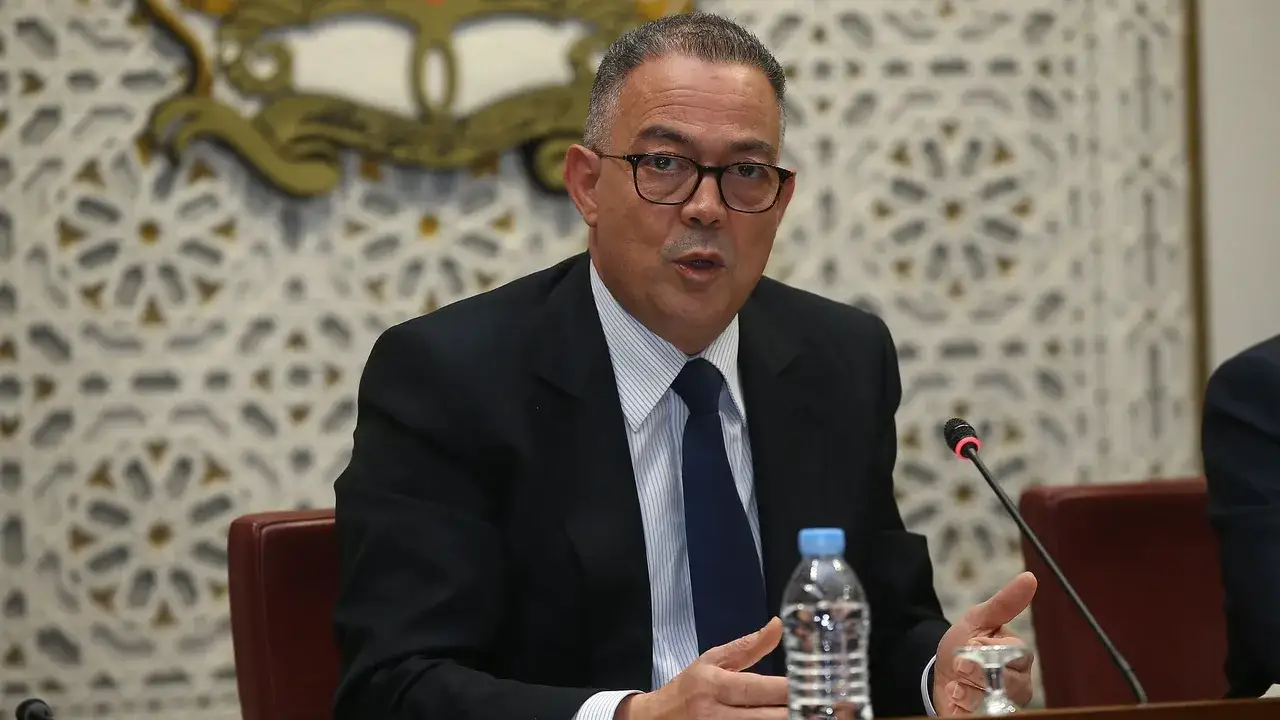
Morocco's Finance Minister Fouzi Lekjaa has defended the country's World Cup 2030 infrastructure financing strategy, emphasizing that massive investments in stadiums, railways, and airports will not automatically translate into increased public debt. Speaking before parliament's Finance Committee, Lekjaa clarified that public enterprises fund these projects through their own resources and economic models, making it misleading to directly add their budgets to state debt calculations. With projects like the 104 billion dirham railway program requiring only 1.2 billion dirhams in direct state contribution, the minister maintains Morocco can host the tournament while preserving fiscal stability.
Listen to this article
Unlock audio versions of premium articles and more with a Pro subscription.
As Morocco accelerates preparations for the 2030 FIFA World Cup, Finance Minister Fouzi Lekjaa has pushed back against concerns that the tournament's infrastructure demands will compromise the kingdom's financial health.
Addressing the House of Representatives' Finance and Economic Development Committee on Tuesday, November 3, during deliberations on the 2027 Finance Bill, Lekjaa presented a detailed defense of how Morocco plans to fund major infrastructure projects without destabilizing public finances.
Separating Public Enterprise Investment from State Debt
The minister's central argument revolves around distinguishing between expenditures directly borne by the state budget and programs executed by public establishments operating with independent financial models.
Lekjaa emphasized that these public enterprises possess their own revenue streams, economic frameworks, and financing mechanisms that don't necessarily translate into equivalent burdens on the general budget.
Taking the National Railway Office (ONCF) as a prime example, the minister noted its 104 billion dirham investment program. He argued that simply adding this entire amount to state debt calculations without considering the establishment's financing structure produces an inaccurate picture of public commitments.
According to Lekjaa, the state's direct contribution to this railway program amounts to just 1.2 billion dirhams. He reminded parliamentarians that railway investments follow long-term cycles, with new infrastructure requiring several years of operation before generating revenues sufficient for amortization.
Airport Investments Also Operate Independently
The same principle applies to airport development projects, the minister explained. Lekjaa contested calculations that automatically incorporate investments by the National Airports Office (ONDA) into state debt figures.
He cited the example of Mohammed V Airport's land holdings, valued at five billion dirhams and integrated into the Office's assets, illustrating a form of public contribution that doesn't correspond to direct treasury disbursement.
Sports Facilities Financed Over Two Decades
For sports infrastructure, the government has adopted a twenty-year financing mechanism. According to Lekjaa, this represents an annual contribution of between 700 and 800 million dirhams and covers the future Grand Stade Hassan II in Benslimane.
The final cost of this flagship stadium remains to be determined, however. The minister explained that a definitive figure can only be established once all contracts have been awarded.
Through these clarifications, Lekjaa aims to counter estimates suggesting the World Cup preparations will substantially increase debt levels. Yet his distinction between public establishment financing and direct budgetary commitments doesn't mean these investments carry no financial risks or effects on public sector debt.
Questions About Implementation Speed
Beyond financing, parliamentary exchanges also focused on project execution timelines.
When questioned about the contrast between sports infrastructure construction deadlines and those for certain hospital facilities, Lekjaa acknowledged the validity of this concern.
Deputies highlighted the difference between stadiums that can be completed in two years versus hospitals whose construction might take twelve years. The minister indicated he shares their questions about the reasons for these disparities.
Lekjaa invited parliamentarians to visit the Grand Stade Hassan II construction site in Benslimane, emphasizing the mobilization of Moroccan companies and expertise in its realization. He also recalled that 106 companies participated in work on the Prince Moulay Abdellah Sports Complex in Rabat.
Revenue Collections Exceed Forecasts
On the budgetary front, the minister expressed confidence about the trajectory of public finances. He mentioned revenue collection results surpassing initial projections and announced the forthcoming presentation of detailed data through the end of October.
The government thus maintains its objective of pursuing investments necessary for organizing the 2030 World Cup while preserving the country's financial equilibrium. The question of executing other public projects, particularly in social sectors where delays continue to fuel debate, remains open.