
Global Economy
Strait of Hormuz Talks: Oman and Iran Push for Temporary Corridor as Oil Prices Slip Below $90
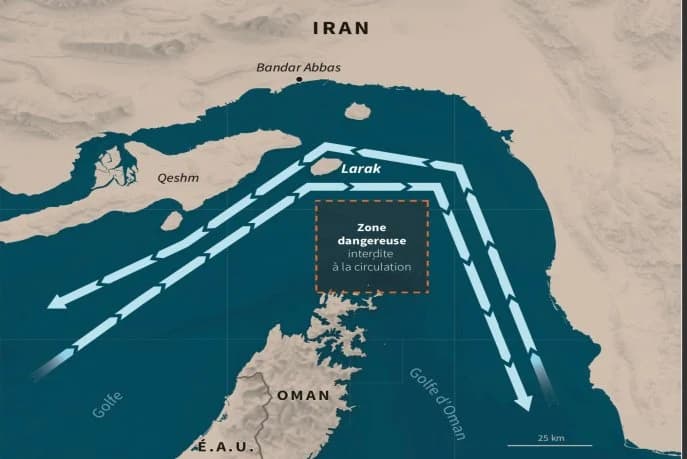
Oman and Iran are negotiating a framework to establish a temporary navigation corridor through the Strait of Hormuz, including a joint demining operation, but Tehran insists the strategic waterway will not reopen until the United States ends the war and lifts its blockade. Despite the impasse, optimism over potential de-escalation pushed Brent crude below the $90 mark on Wednesday, shedding more than 2% in a session marked by conflicting signals from Washington and Tehran. With the conflict now in its sixth month and US midterm elections approaching, the diplomatic push from Muscat could offer a fragile path toward stabilizing one of the world's most critical energy chokepoints.
Listen to this article
Unlock audio versions of premium articles and more with a Pro subscription.
Diplomatic Push to Reopen the World's Most Critical Oil Chokepoint
Iran and Oman are advancing negotiations on a framework agreement that would create a temporary navigation corridor through the Strait of Hormuz, alongside a joint demining operation, according to a joint statement released following high-level talks in Muscat. However, Iranian officials made clear on Wednesday that the strategic waterway will remain closed until the United States fully ends the war, lifts its blockade, and addresses the situation in Yemen.
The diplomatic effort comes as the Middle East conflict enters its seventh month, triggered by Israeli-American strikes on Iran in late February. Tehran retaliated by targeting US-aligned countries in the region and effectively shutting down the Strait of Hormuz, through which roughly one-fifth of global hydrocarbons previously transited. The blockade has since driven oil prices sharply higher and intensified political pressure on the Trump administration ahead of November's midterm elections.
Muscat's Mediation Effort
On Tuesday, Iranian Foreign Minister Abbas Araghchi met with his Omani counterpart Badr al-Busaidi in Muscat to discuss what both sides described as a framework for a "temporary corridor" and coordinated demining operations. Araghchi noted on X that negotiations with Omani and Pakistani partners have focused on "regional solutions," with the proposed corridor framework, joint demining, and future management of the strait serving as prime examples.
Oman's top diplomat struck a cautiously optimistic tone, writing on X that he hopes to "soon announce" a new navigation corridor "along with practical modalities to restore safe navigation." The joint statement added that further talks will address a "permanent" corridor, the long-term management of the strait, and mechanisms for providing essential navigation and security services.
Tehran Sets Conditions for Reopening
Despite the diplomatic momentum, Iran's Deputy Foreign Minister Kazem Gharibabadi drew a hard line early Wednesday. On X, he warned that "before any action aimed at reopening the Strait of Hormuz, the United States must fully implement all the commitments it has violated."
Gharibabadi added that the strait would only reopen "in exchange for an end to the war on all fronts, the lifting of the blockade, and a resolution of the situation in Yemen." He further signaled that Iran's response to the latest US sanctions would be to "target their economic interests."
Washington Ramps Up Economic Pressure
The United States responded this week with a new round of "secondary" sanctions targeting Iran's commercial partners rather than Iran directly. The measures cover gold, technology, digital assets, aviation, and maritime transport. Treasury Secretary Scott Bessent stated on Monday that Washington aims to "cut off all economic resources" from Iran.
President Trump added a new layer of complexity, claiming on his social media platform that the US Navy had confirmed "all mines have been removed and/or destroyed in international waters of the Strait of Hormuz." He warned that any vessel laying new mines would be "destroyed." However, Trump also reportedly threatened Oman with bombings if the sultanate stood in the way of US objectives in the strait — a claim that adds tension to the mediation process.
Oil Markets React to Diplomatic Signals
Despite the contradictory messages from both capitals, oil traders pushed prices lower in a wave of cautious optimism. Brent crude fell more than 2% on Wednesday, settling below the psychologically important $90-per-barrel mark. The move suggests that markets are beginning to price in the possibility of a partial resolution, even as fundamental risks remain elevated.
On the ground in Iran, meanwhile, the human cost of the crisis continues to mount. Long lines formed at gas stations across Tehran on Tuesday as Iranians braced for potential fuel shortages, highlighting the domestic pressures facing the regime amid decades of international sanctions.
What to Watch Next
- Framework announcement: Whether Oman and Iran can formalize the temporary corridor agreement in the coming days.
- US response: Whether Washington engages with the framework or dismisses Tehran's preconditions.
- Sanctions escalation: The impact of secondary sanctions on Iran's trading partners, particularly in Asia.
- Oil price trajectory: Whether the move below $90 holds or reverses amid renewed tensions.
With inputs from AFP.