
Stocks Market
Gold Climbs Back Toward $4,400 as Weaker Dollar Fuels Precious Metal Rally
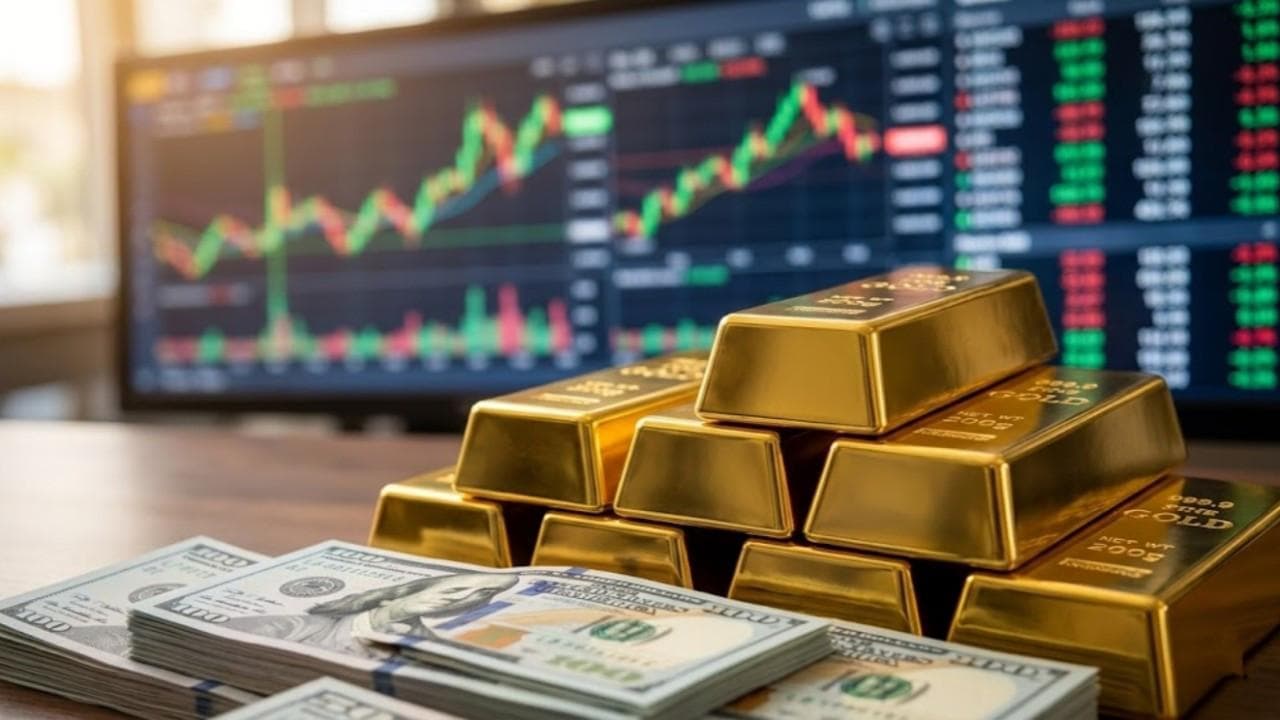
Gold prices recovered Wednesday, trading near $4,400 per ounce after declining for two consecutive sessions. The precious metal's rebound is primarily driven by dollar weakness, while investors adopt a cautious stance ahead of critical central bank policy decisions. Market participants are also monitoring upcoming U.S. inflation data and rising oil prices, which add complexity to the outlook for both monetary policy and gold's safe-haven appeal.
Listen to this article
Unlock audio versions of premium articles and more with a Pro subscription.
Gold staged a notable recovery on Wednesday, climbing back toward the $4,400-per-ounce mark following two consecutive days of losses. The precious metal's resurgence reflects renewed buying interest as currency dynamics shift in its favor.
Dollar Weakness Provides Tailwind
The primary driver behind gold's rebound is the weakening U.S. dollar, which makes dollar-denominated gold more affordable for buyers using alternative currencies. The greenback's recent decline has been particularly pronounced against the Japanese yen, which has appreciated significantly since the beginning of the month.
This currency relationship creates a natural support mechanism for gold prices, as the inverse correlation between the two assets continues to play out in global markets.
Central Bank Decisions Loom Large
Market participants are proceeding with caution as three major central banks prepare to announce policy decisions. The Federal Reserve, European Central Bank, and Bank of Japan are all expected to raise their benchmark interest rates during the current month.
These anticipated moves reflect the ongoing battle against inflation across major economies, though the specific timing and magnitude of rate adjustments remain subject to incoming economic data.
Inflation Data in Focus
Investors are closely monitoring this week's release of key U.S. inflation indicators, which will provide critical insights into the Federal Reserve's potential policy trajectory. Should inflation prove more persistent than expected, it could reinforce expectations for additional rate increases ahead.
This scenario presents a challenge for gold, which yields no income and becomes comparatively less attractive when interest-bearing investments offer higher returns. The non-yielding nature of gold positions it at a disadvantage in a rising rate environment.
Oil Rally Adds Inflationary Pressure
Concurrent with gold's recovery, crude oil prices continued their upward march amid escalating tensions in the Middle East. The petroleum market's strength is reigniting concerns about inflationary pressures and reinforcing expectations for tighter monetary policy.
This development creates a complex dynamic for gold, which benefits from its traditional role as both a safe-haven asset and an inflation hedge, while simultaneously facing headwinds from the prospect of higher interest rates.
The precious metal now finds itself balanced between competing forces: dollar weakness and geopolitical uncertainty supporting prices, while the threat of aggressive central bank tightening applies downward pressure.