
Global Economy
2026 Nobel Prize in Economics Awarded to Woodford and Hall for Pioneering Micro-Founded Macro Models
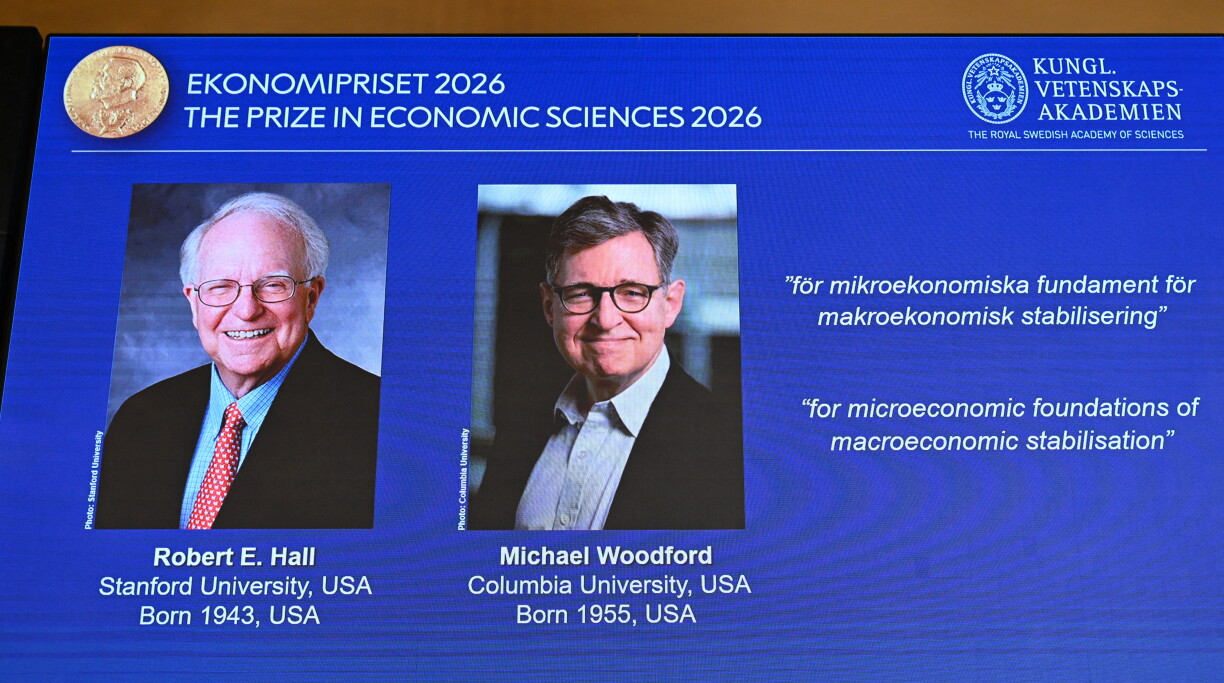
The Royal Swedish Academy of Sciences has awarded the 2026 Nobel Prize in Economic Sciences to American economists Michael Woodford and Robert Hall. Their groundbreaking work established micro-foundations for macroeconomic models, providing central banks and governments with robust theoretical tools to design stabilization policies that mitigate economic cycles. The prize recognizes how their frameworks explain the interaction of individual household and firm decisions in shaping aggregate economic dynamics, directly influencing modern policy responses to shocks like energy crises or sudden demand shifts.
Listen to this article
Unlock audio versions of premium articles and more with a Pro subscription.
Stockholm, October 12, 2026 — The Royal Swedish Academy of Sciences announced Monday that the 2026 Sveriges Riksbank Prize in Economic Sciences in Memory of Alfred Nobel has been awarded to Michael Woodford of Columbia University and Robert Hall of Stanford University. The duo was honored for their transformative contributions to macroeconomic theory, specifically for embedding microeconomic foundations into models used to guide monetary and fiscal stabilization policies.
A Paradigm Shift in Macroeconomic Modeling
Traditional macroeconomic models often relied on aggregate statistical relationships between variables such as inflation, output, and consumption. Woodford and Hall broke from this approach by explicitly modeling how individual decisions of households and firms — regarding consumption, investment, pricing, and labor supply — interact to produce economy-wide outcomes. This micro-founded methodology provides a more structural and policy-relevant framework, allowing authorities to simulate the effects of interest-rate changes, tax adjustments, or supply shocks with greater precision.
Direct Impact on Central Banking Practice
According to John Hassler, chair of the Nobel Committee for Economic Sciences, the laureates' work "offers a robust theoretical foundation for the decision-making models now deployed by central banks and governments worldwide to respond to exogenous shocks, whether energy crises or abrupt demand shifts." Their frameworks underpin the New Keynesian models used by major institutions like the Federal Reserve, the European Central Bank, and the IMF for forecasting and policy analysis.
Prize Context and Ceremony
The 2026 economics prize concludes this year's Nobel season. Last year's award went to Joel Mokyr, Philippe Aghion, and Peter Howitt for research on innovation and growth. The 2026 laureates in other categories include Karl Deisseroth, Peter Hegemann, and Georg Nagel (Medicine); Francis Halzen (Physics); Henri Kagan and Kenso Soai (Chemistry); poet Anne Carson (Literature); and South African jurist Navi Pillay (Peace). The winners will receive their medals and a prize sum of 12 million Swedish kronor (approximately $1.1 million) at the formal ceremony in Stockholm on December 10.