
Stocks Market
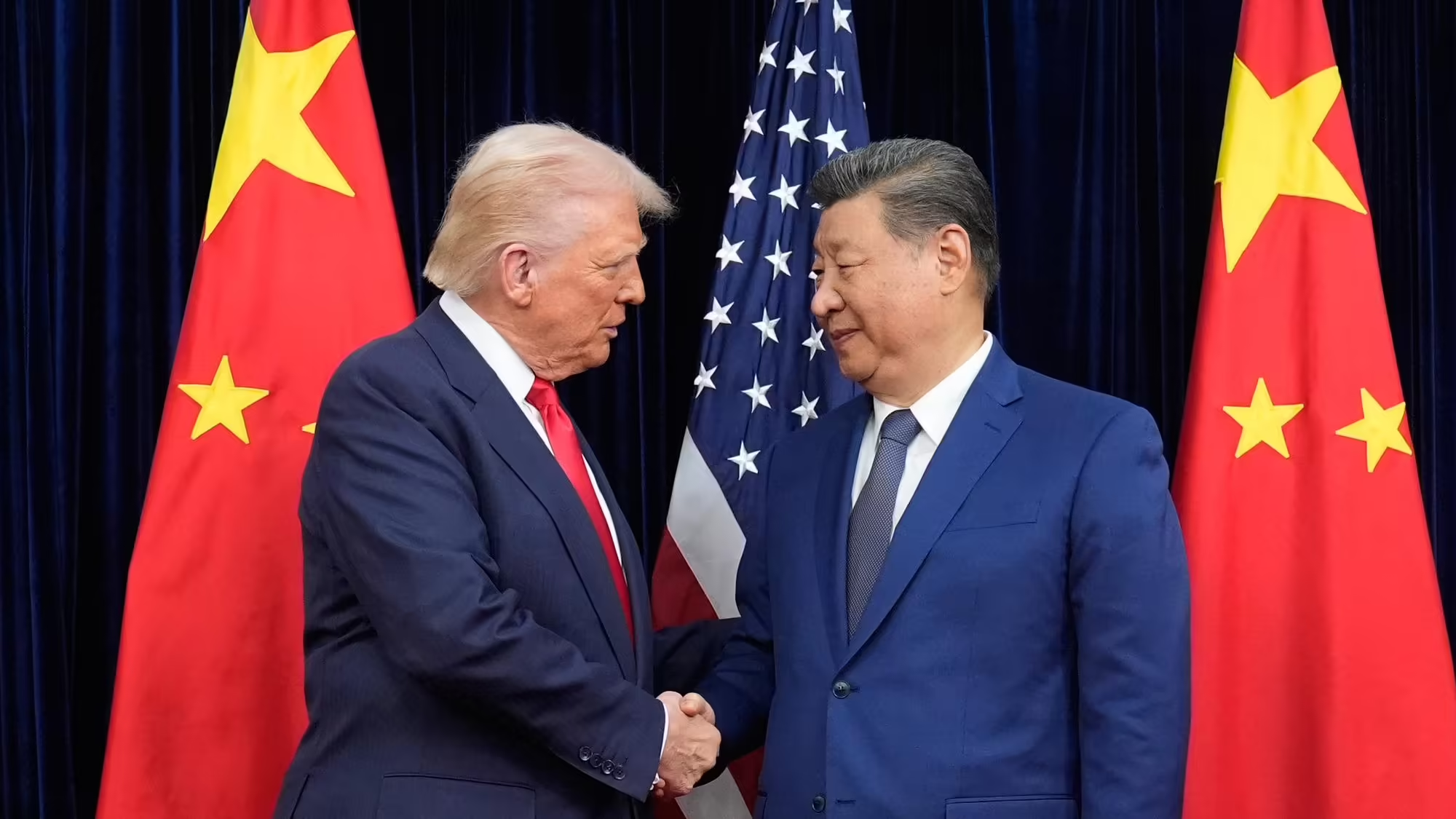
Trump & Xi Secure Partial Trade Deal in Busan, Signaling US‑China Economic Reboot
During a landmark meeting in Busan, South Korea, U.S. President Donald Trump and Chinese President Xi Jinping confirmed a series of partial trade agreements easing tariffs, boosting American soybean imports, and securing rare‑earth exports for Beijing. Both leaders emphasized a commitment to stabilize bilateral ties and cited intentions to split key issues—such as fentanyl trafficking, advanced AI chip restrictions, and technology transfers—into manageable blocks. The talks came just before the 32nd APEC Economic Leaders Summit and set a tone of cautious optimism amid lingering trade and tech tensions. While the deals relax barriers to some extent—sliding U.S. tariffs to roughly 47% and Chinese duties to about 10%—they remain temporary, with most provisions expiring on November 10. The Washington–Beijing dialogue signals a desire for incremental, pragmatic progress rather than a sweeping overhaul, as both administrations navigate the complex dance of economic competition and cooperation.
Listen to this article
Unlock audio versions of premium articles and more with a Pro subscription.
In a historic Busan summit, President Donald Trump and President Xi Jinping signed a set of partial trade agreements that ease tariffs, revive U.S. soybean imports by Beijing, and lock in exports of critical rare‑earth materials for China.
Key Highlights
- Tariff Curbs – U.S. duties on Chinese goods lowered to about 47%, Chinese duties on U.S. goods to roughly 10%.
- Soja & Rare Earths – Beijing commits to a new wave of American soybean purchases; China agrees to maintain its current rare‑earth export schedule.
- Fentanyl Fight – Both presidents pledge a joint effort to curb illicit fentanyl trafficking.
- Tech & Chips – Trump references the sale of lower‑tier Nvidia chips; no high‑tech AI chip deal reached, but a framework for future cooperation is outlined.
- APEC Context – The talks are set against the backdrop of the 32nd APEC Economic Leaders Summit in Gyeongju.
These deals, while temporary—many of them set to expire on November 10—signal a cautious shift toward cooperation in the U.S.‑China economic dance. Both leaders stressed the importance of steady communication and set a tone of “let’s keep the ship on course” despite remaining uncertainties.
For investors, the easing of tariffs could improve supply‑chain dynamics for U.S. chipmakers, while China's rare‑earth commitments reaffirm its position as a key component supplier to global high‑tech industries.