
Stocks Market
From the Shouting Floor to Digital Screens: Casablanca Stock Exchange’s Shift from Open Outcry to Electronic Trading (Episode 2)
Until the late 1990s, the Casablanca Stock Exchange operated through a short, intense open‑outcry session where traders shouted prices on the floor. As market liquidity grew and order flow increased, this method became a bottleneck, prompting a swift migration to an electronic platform in 1997‑1998. The article recounts the mechanics of the old system, the challenges that led to its demise, and the modern trading schedule that now runs from 9 am to 3:30 pm with real‑time price dissemination. Understanding this historic transition highlights how technology reshaped price formation in Morocco’s main equity market and sets the stage for further digital innovations.
Listen to this article
Unlock audio versions of premium articles and more with a Pro subscription.
Markets – Thursday, 26 February 2026
From the Shouting Floor to Digital Screens
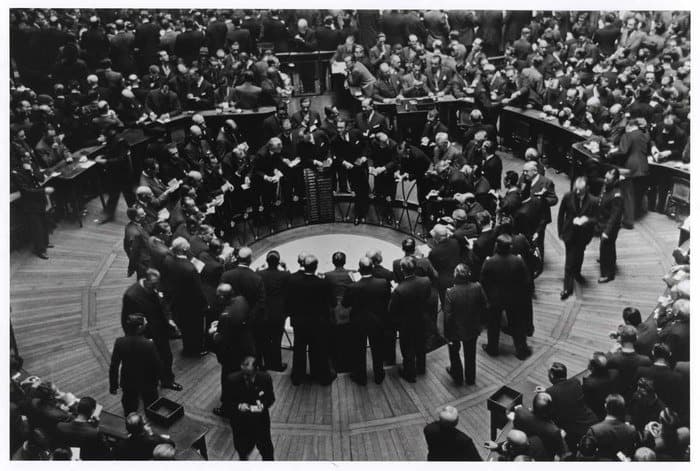
Until the end of the 1990s, the Casablanca Stock Exchange did not operate continuously. Trading was confined to a short, two‑hour window (11 am–1 pm) on the parquet floor, where all market intermediaries gathered physically.
Open‑outcry mechanics
- Orders were conveyed by floor clerks under the supervision of a commissioner.
- Starting from the previous day’s reference price, each clerk announced his price limits, often without specifying volumes.
- Whenever a buying limit met a selling limit, a transaction occurred and a price was recorded.
- The same security could be quoted at several different prices within a single session.
This “criée” (shouting) method allowed a price to emerge by concentrating supply and demand at the same moment, which was essential in a market with limited liquidity. However, it also had clear drawbacks.
Why the system fell short
- Time constraints: The two‑hour window could not keep pace with the constant flow of economic, political, or sectoral information. Investors often missed the optimal moment to adjust positions.
- Capacity bottlenecks: As order flow grew, the floor became a funnel. Excess orders could not be fully executed; the price that minimized the overall gap was chosen, leaving many orders pending.
These operational limits, more than a mere desire for modernization, pushed the exchange toward electronic quoting.
The electronic migration
- March 1997 – pilot phase on four securities.
- June 1998 – electronic trading extended to all equity securities.
- August 1998 – bond market (debt securities) also moved to the electronic platform.
- The system adopted was the NSC, originally developed in the 1990s for the Paris Stock Exchange.
Further technological upgrades followed. Since January 2001, brokerage firms have been equipped with trading workstations that allow them to execute orders from their own offices, bypassing the parquet.
Current market schedule
- From 1 February 2005, the trading day runs from 9 am to 3:30 pm.
- The session is divided into three phases: pre‑open, open, and close.
- Orders are entered automatically, matched by algorithm, and market data is disseminated in real time.
The transition erased the old price‑formation ritual. The open‑outcry became a historical footnote, and the Casablanca market entered an era where information, orders and prices flow instantly.
Y.S.